
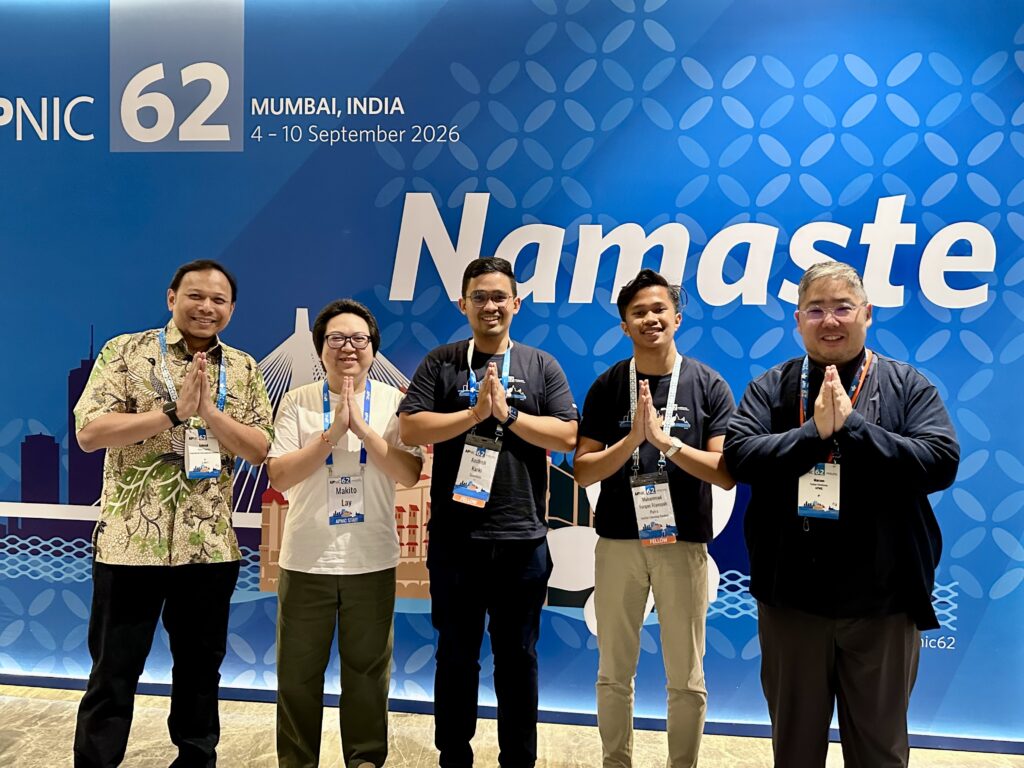
Aashish Karki’s APIE journey started almost by chance.
During an EBA fieldwork activity in Hokkaido, he noticed fellow participant Daffa working on an APNIC lab while they were travelling by bus. Curious about what he saw, Aashish looked into the program, discovered that students from Tribhuvan University (TU) in Nepal could participate, and joined the next APIE Core Course.
That first step eventually led him to an APIE Camp at Universiti Sains Malaysia (USM), the APIE Advanced Camp in Japan, two course batches as a teaching assistant, and involvement in growing the APIE community at TU.
In 2026, it led to another opportunity: Aashish was selected for the APNIC Fellowship Program and joined APNIC 62 in Mumbai, India.
Alongside him was another APIE alumnus, Muhammad Furqan Riansyah Putra from Institut Teknologi Bandung (ITB) in Indonesia. Together, their experiences show how the knowledge, practical experience, and connections built through APIE can become a foundation for opportunities in the wider Internet community.
From learners to the next opportunity
Aashish joined APIE while university exams were still underway, initially balancing the course with his studies before becoming more deeply involved. After completing the course and attending APIE Camps, he also put his networking knowledge into practice through a student-led campus networking team, working with network topology and helping troubleshoot issues across university departments and dormitories. He also helped introduce APIE to more students at TU.
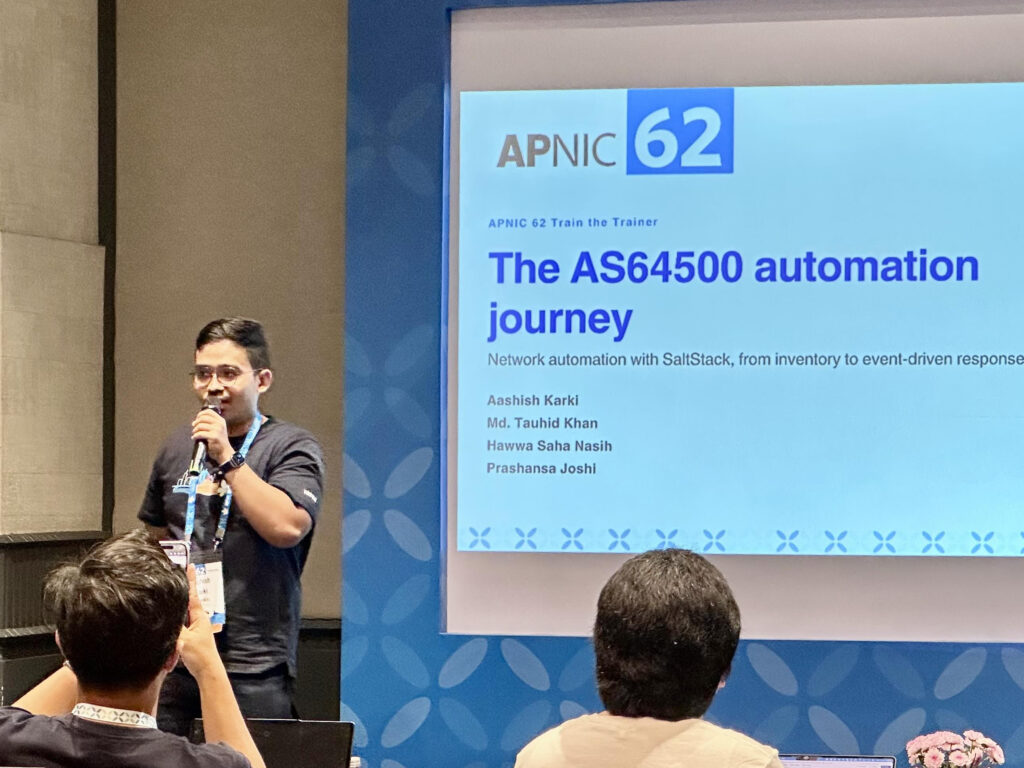
Today, he recalls how a first message shared with students on campus gradually grew into wider awareness of the program. That local momentum is continuing, with TU set to host the next APIE Camp in October 2026.
For Aashish, the APNIC Fellowship felt like a natural next step after the APIE Core Course, Camp, and Advanced Camp. “APNIC Fellowship seemed to be the perfect technical fellowship as a next step,” he said, pointing to the combination of technical learning, project development, policy, and Internet governance.
“APNIC Fellowship seemed to be the perfect technical fellowship as a next step.”
Aashish Karki
Furqan arrived at the Fellowship through a different route.
He first heard about APIE in 2023 from an ITB senior who described it as the best network engineering program he had attended. Furqan joined APIE Core Course Batch 4, later attended an APIE Camp at Universitas Hasanuddin (UNHAS), and returned to support other learners as a teaching assistant. “I met the community and I have never regretted a single thing since,” he recalled.
A foundation for participating in the wider Internet community
For both alumni, APIE provided more than technical knowledge.
Aashish says his hands-on experience with real network infrastructure, followed by practical involvement in his university network, helped strengthen his profile when applying for the APNIC Fellowship.
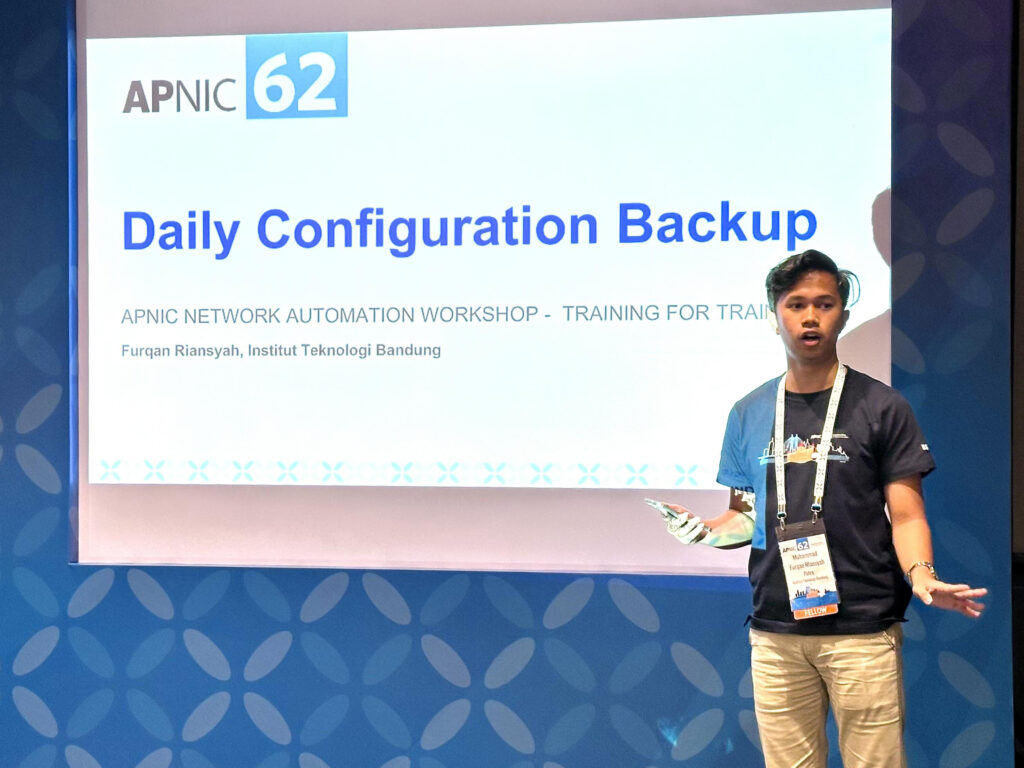
For Furqan, APIE prepared him in two complementary areas: Internet engineering and Internet governance. The operational experience and foundational knowledge helped him understand how the Internet works, while exposure to governance introduced him to the organizations and communities involved in shaping it.
“APIE prepared me on two fronts,” he explained: technical knowledge and experience, and the governance knowledge needed to understand and contribute to discussions.
Makito Lay, APNIC Network Analyst and Technical Trainer, has seen this progression from another perspective.
A recurring APIE guest lecturer and mentor for APIE Camp participants, Makito sees APIE as providing a strong engineering foundation, while opportunities such as the APNIC Fellowship help learners understand how those technical elements fit into a much broader ecosystem. “The Internet is a global ecosystem operated by many different stakeholders,” he said.
“The Internet is a global ecosystem operated by many different stakeholders.”
Makito Lay, APNIC
For Makito, becoming a good engineer therefore goes beyond knowing how to configure networks and systems. Connecting with the wider Internet community allows young engineers to learn from others, collaborate across organizations and economies, and work together on common challenges.
One foundation, different paths forward
The Fellowship is also helping Aashish and Furqan explore very different directions.
Aashish deepened his knowledge of network automation and developed a project around Security Operations Center alert triaging. As he begins his professional career, he hopes to continue developing this work while becoming more involved in the Internet community and pursuing further technical and fellowship opportunities.
Furqan sees his next steps primarily in research.
“Being here has given me the opportunity to see what the real-world problems of the Internet are and where I might fit in as an incoming researcher.”
Muhammad Furqan Riansyah Putra (ITB)
At APNIC 62, conversations with engineers, researchers, and other community members gave him a closer view of the challenges facing the Internet in different economies and how people are working to address them.
“Being here has given me the opportunity to see what the real-world problems of the Internet are and where I might fit in as an incoming researcher,” he said.
Their directions may be different, but both demonstrate how a foundation in Internet engineering can open pathways into professional practice, research, governance, and wider community participation.
Continuing the cycle
There is another thread connecting their stories.
Both first joined APIE as learners. Both later came back as teaching assistants, helping another group begin the same journey.
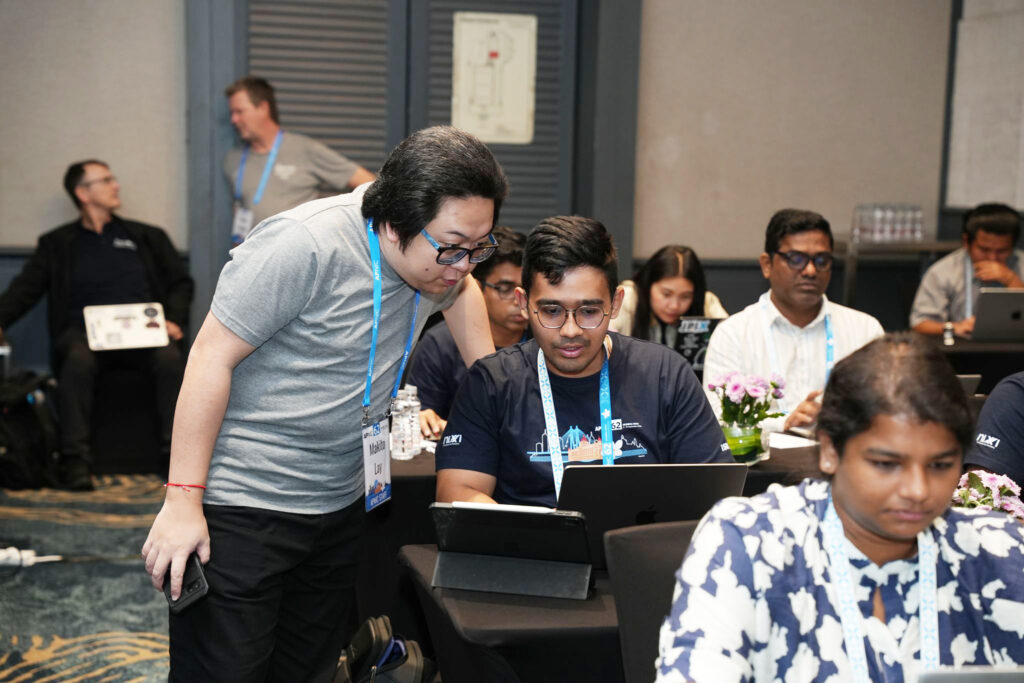
Makito encourages APIE learners to carry that cycle further as they gain experience: not only taking new opportunities to learn, but also finding ways to give back as mentors, trainers, and contributors to the Internet community.
Aashish similarly encourages learners to make full use of APIE, apply what they learn through projects and other activities, and keep pursuing opportunities beyond the program.
Furqan offers a simpler piece of advice: “Find your why.” For him, genuine interest and the experiences accumulated through APIE already give learners a story to tell. The next step is understanding where they want that story to take them.
For Aashish and Furqan, the APNIC Fellowship was one such next step — taking what they had learned through APIE into a wider Internet community, and opening new possibilities for where they might contribute next.