
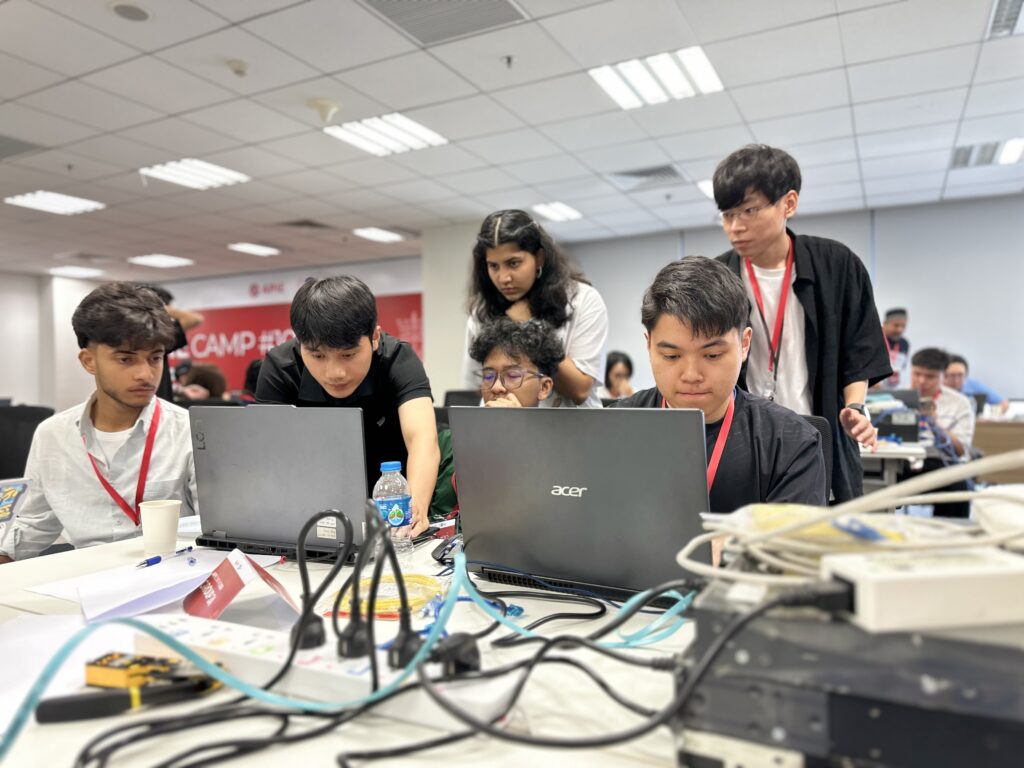
Twenty-four participants. Ten economies. Six Teaching Assistants. Three NOC team members.
Numbers help tell the story of APIE Camp #10, hosted by the Vietnam Internet Network Information Center (VNNIC) in Hanoi in August 2026. Behind those numbers, however, are individual journeys—some just beginning, others already coming full circle.
Their voices show how the APIE learning journey can extend beyond technical skills: toward building confidence and connections, sharing knowledge, and eventually helping others learn.
A camp of first steps
APIE Camp #10 brought many firsts. It was the first APIE Camp in Viet Nam and the first to welcome participants from Timor-Leste and Laos. Learners from the National University of Laos (NUOL), Universidade Nacional Timor Lorosa’e (UNTL), Vietnam Japan University (VJU), and Chulalongkorn University also joined an APIE Camp for the first time.
For some, those institutional milestones were also deeply personal ones.
Marquita Baptista from UNTL, the first participant from Timor-Leste, arrived excited but uncertain. When she first entered the classroom, she remembers looking around and questioning whether she belonged there. As the week progressed, learning alongside welcoming instructors and participants from different countries helped that uncertainty fade and her confidence grow.
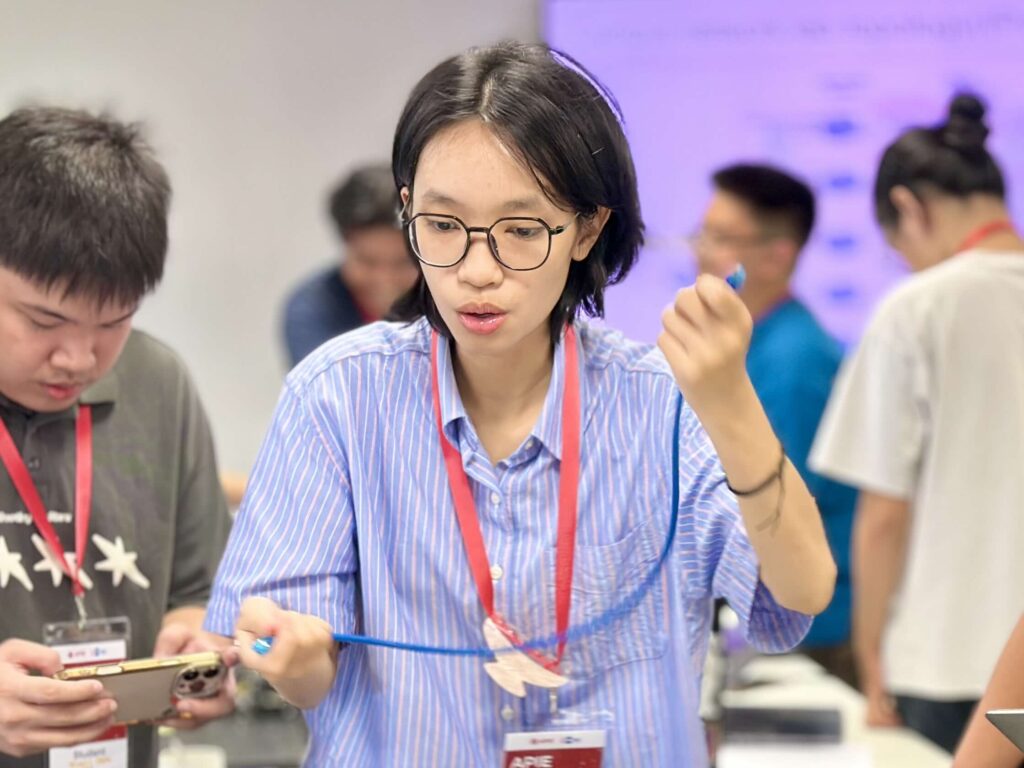
Thoumma Phathavong from NUOL, APIE’s first camp participant from Laos, was taking another big first step: the camp was his first international event.
“Everyone was so welcoming, friendly, and helpful that I never felt alone for a single moment.”
Thoumma Phathavong, participant from NUOL.
For Napasorn ‘Fah’ Suwannakij and Ratchanon Tiratsorn, the first participants from Chulalongkorn University, the experience opened new possibilities too—from exploring a future in network engineering to building friendships and international connections.
Learning by doing, together
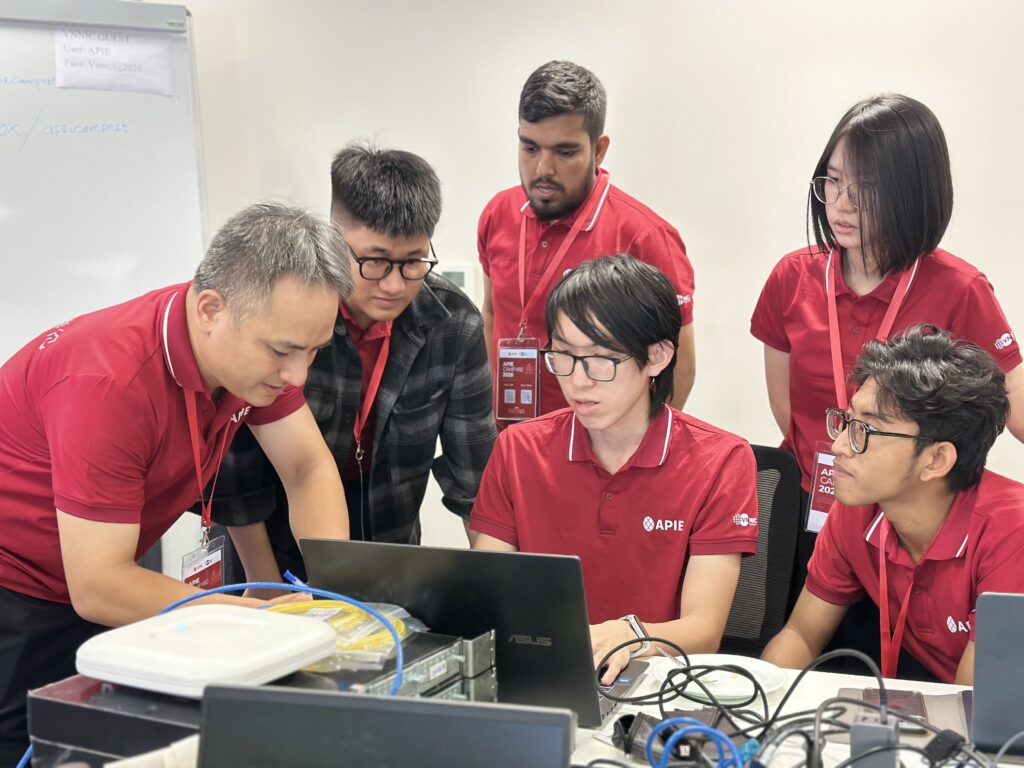
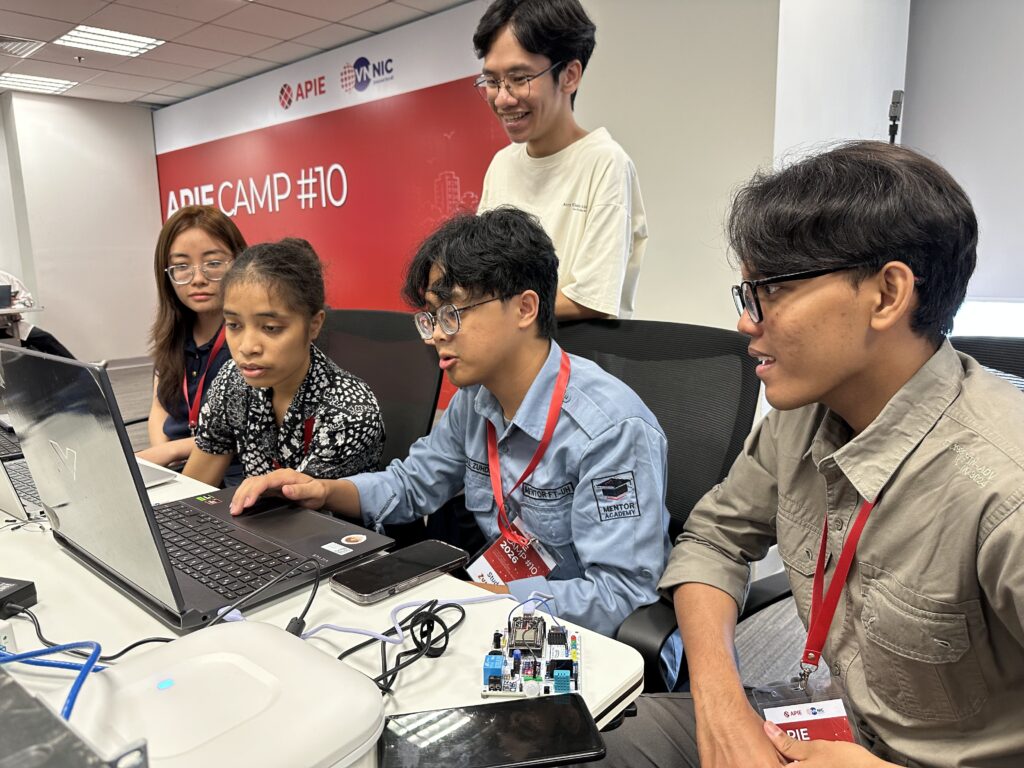
Throughout the five-day camp, lectures were followed by hands-on activities that challenged participants to configure equipment, troubleshoot problems, and apply what they were learning as a team.
For Lam Nguyen from VJU, the approach complemented concepts she had previously studied at university. Configuring real routers and switches helped turn theory into something more tangible, while working with students from different educational and cultural backgrounds introduced new ways of thinking and solving problems.
“Meeting so many smart and talented friends from different backgrounds opened a whole new world for me.”
Lam Nguyen, participant from VJU.
The same learning process was visible from the other side of the classroom.
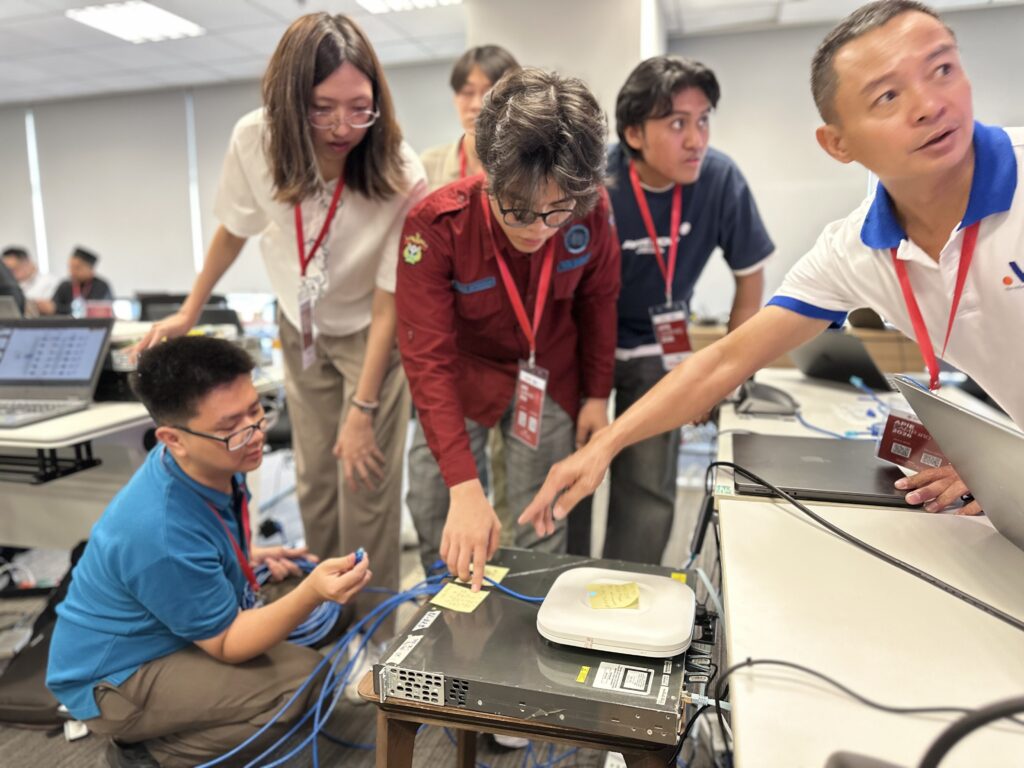
Nguyen Binh from VNNIC, who played a key role in preparing the technical curriculum and delivering its content, was particularly impressed by participants sharing ideas and helping one another through technical challenges.
“Meeting and working with participants from different countries made the world feel a little closer.”
Nguyen Binh, lecturer from VNNIC.
He hopes participants leave with a strong foundation in networking and systems, a better understanding of the Internet ecosystem, and the confidence to keep learning.
Fellow VNNIC lecturer Nguyen Huy Bac was similarly impressed by their curiosity and persistence, particularly their determination to understand unfamiliar problems and find complete solutions.
Taking the experience home
What participants take away from an APIE Camp does not necessarily stay at the camp.
Napasorn hopes to encourage more hands-on and collaborative learning at Chulalongkorn University, while Ratchanon wants to introduce other students to the APIE Core Course.
Marquita returned to Timor-Leste wanting to make the path easier for the students who come after her:
“I want to guide, support, and inspire other students in Timor-Leste who have the same dream, sharing what I learned and making it easier for future participants to follow this path.”
Marquita Baptista, participant from UNTL.
For some Camp #10 participants, that next step has already begun. Marquita, Thoumma, and Lam are now serving as Teaching Assistants for APIE Core Course Batch 9, supporting other learners as they begin their own APIE journeys.
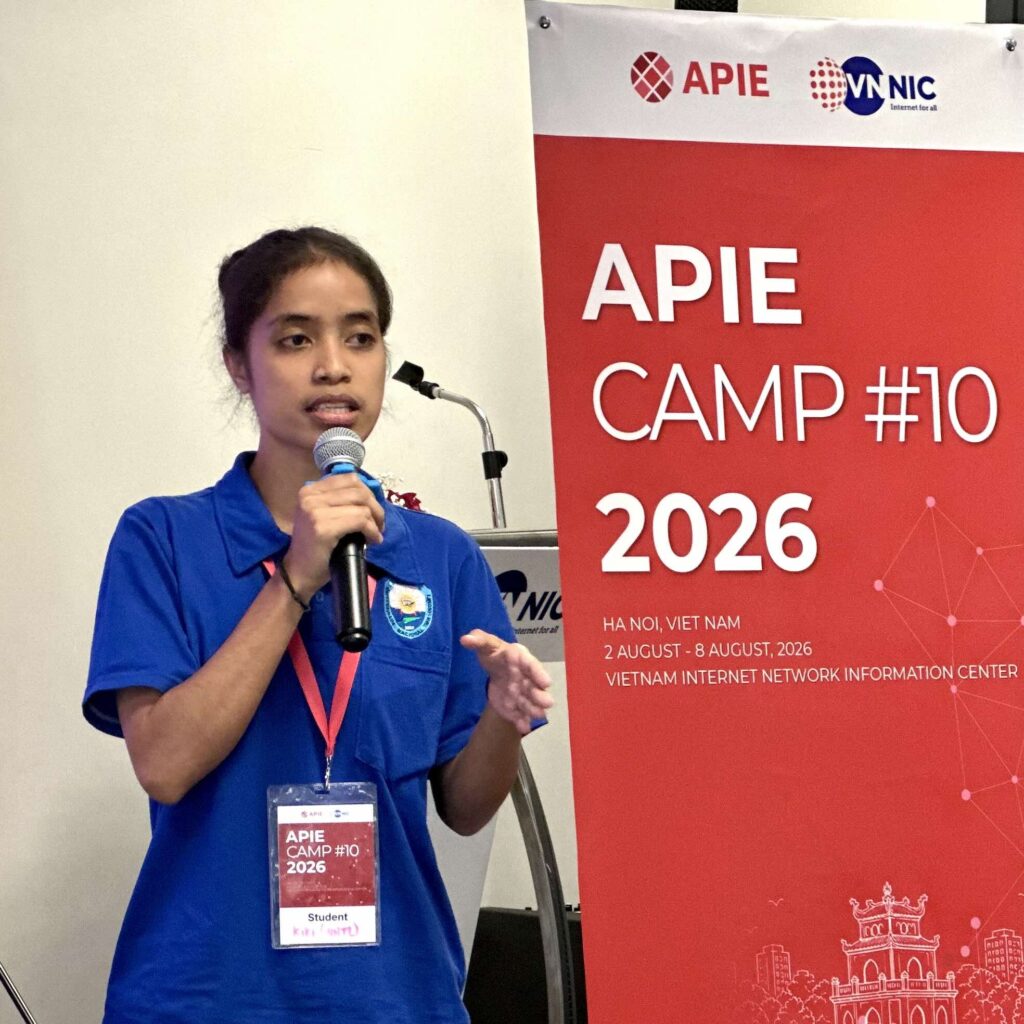
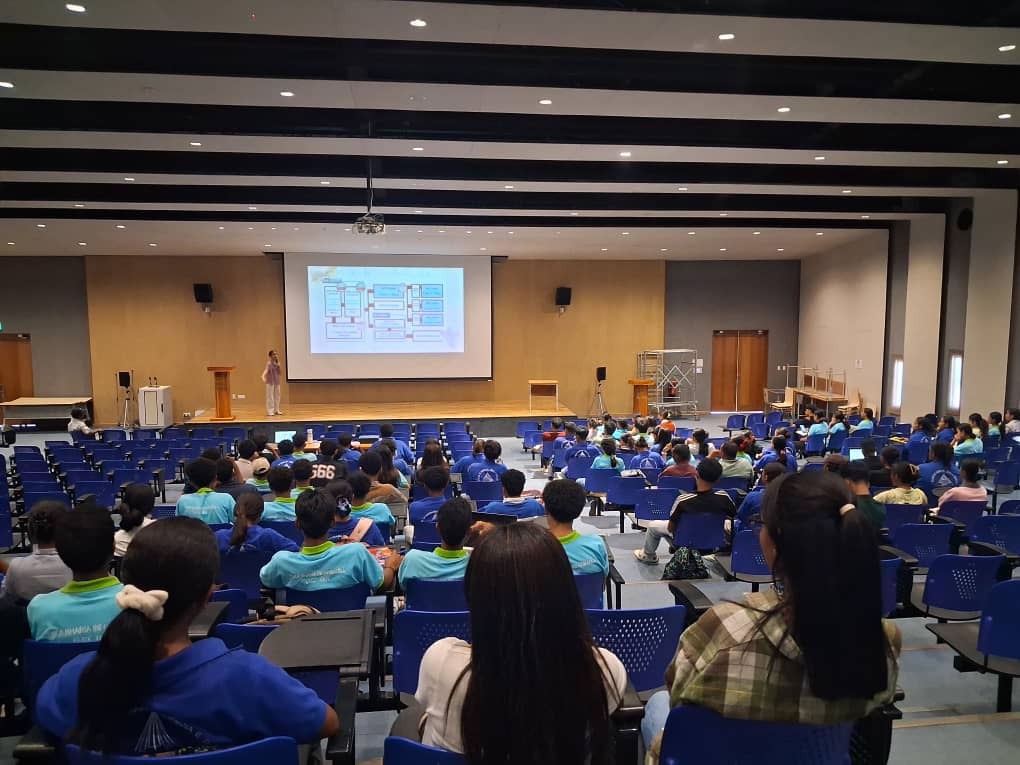
Thoumma has created a WhatsApp group to guide local students in Laos through the course, while Lam hopes to make more VJU students aware of APIE and the opportunities available beyond their university studies.
Coming back to contribute
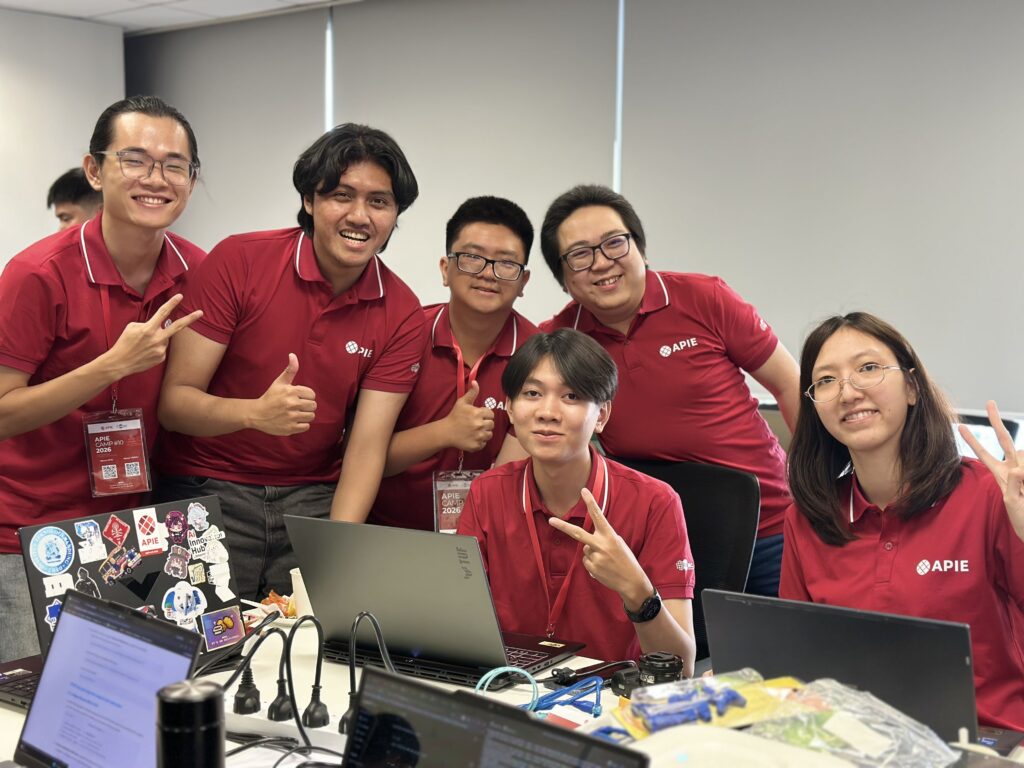
This progression from learner to contributor was visible throughout Camp #10. The camp was supported by six Teaching Assistants, all APIE alumni, and a three-member NOC team that prepared and maintained the technical environment.
For Binh, seeing former participants return in these roles reflects what he hopes APIE can encourage: learners continuing to develop, sharing what they know, and eventually returning as Teaching Assistants, NOC members, or participants in more advanced activities.
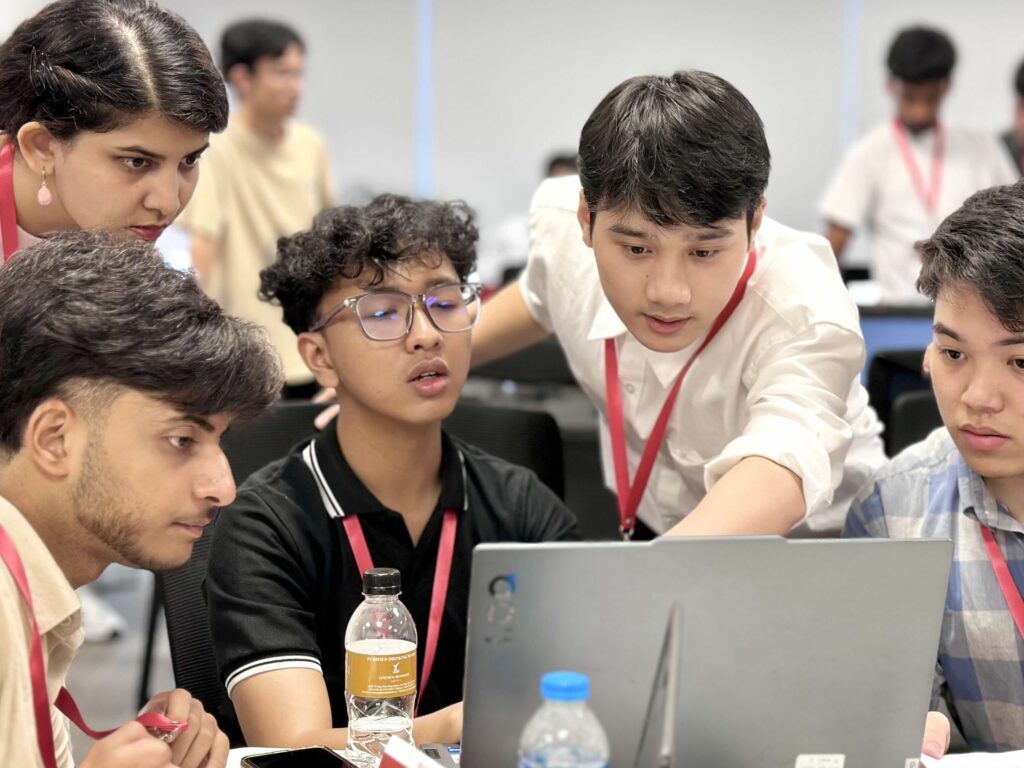
Khanh Nguyen followed that path from APIE Core Course Batch 7 to APIE Camp #9 as a participant, before returning to Camp #10 as a Teaching Assistant.
“Knowledge is very important, but the experience of connecting, sharing, and communicating is what I always aim for.”
Khanh Nguyen, teaching assistant/mentor
Khanh wanted participants visiting his home country to receive the same warm welcome he had experienced at his own camp. Supporting others also strengthened his communication skills and patience and challenged him to think about how to make technical knowledge understandable to others.
As he now prepares for master’s studies and develops his own startup, Khanh says one change since his first APIE experience is particularly simple: he says “yes” more often to new opportunities.
Building the Internet community through people
For VNNIC, connecting people is an important part of why opportunities like APIE matter.
Nguyen Hong Ha from VNNIC, one of the organizers of Camp #10, described APIE as an environment where students, instructors, and young engineers from different countries can learn together, exchange experiences, and build connections.
“Beyond technical knowledge, we believe that the value of opportunities like APIE lies in connecting people.”
Nguyen Hong Ha, organizer from VNNIC
Throughout the week, she saw participants from different languages, cultures, and technical backgrounds sharing ideas and solving problems together—reflecting, in her view, the collaborative way the Internet community itself has developed.
At the opening of the camp, Nguyen Truong Giang, Acting Director General of VNNIC, highlighted the importance of technical capacity building and regional collaboration in developing the next generation of Internet professionals. Hosting the first APIE Camp in Viet Nam, he noted, also represented Viet Nam’s contribution to the wider Asia-Pacific Internet community.
Camp #10 brought together people at very different points in their journeys: some discovering APIE for the first time, others returning to share what they had learned.
Behind the numbers, those individual journeys show how learning can travel—from one participant to another, from one cohort to the next, and across institutions and borders.
MINI INTERVIEW
One journey through APIE: Le Viet Anh
Le Viet Anh (HUST), joined his first APIE Camp as a participant in UNHAS (Makassar, Indonesia), in 2024. At Camp #10 in his home country, he returned as part of the NOC team for the third time, helping create the technical environment in which a new group of participants could learn.
What made you want to come back and contribute as a NOC member?
APIE was my first experience joining a bootcamp outside my home country, and it gave me the chance to meet friends and people from many different countries. It made me realize how valuable it is to be part of an international community. I wanted to come back not only to experience that atmosphere again, but also to give something back to the community that I had learned so much from.
How was being a NOC member different from being a participant?
As a participant, my main focus was to learn and complete the exercises. As a NOC member, my responsibility was much broader. I had to understand the intention behind each practice and work with the NOC team to make sure everything was ready and worked as expected for the students.
I was no longer just experiencing the practice myself—I had to make sure that it could be successfully experienced by everyone else.
Looking back at your first APIE experience, how do you think you have changed?
I think the biggest change is maturity, both technically and personally. During my first APIE experience, I was mainly focused on learning and gaining knowledge for myself. Now, I feel more confident sharing what I know, supporting others, and contributing to the community.
“It has been a great journey from being someone who came to learn, to someone who can also help others learn.”
Le Viet Anh