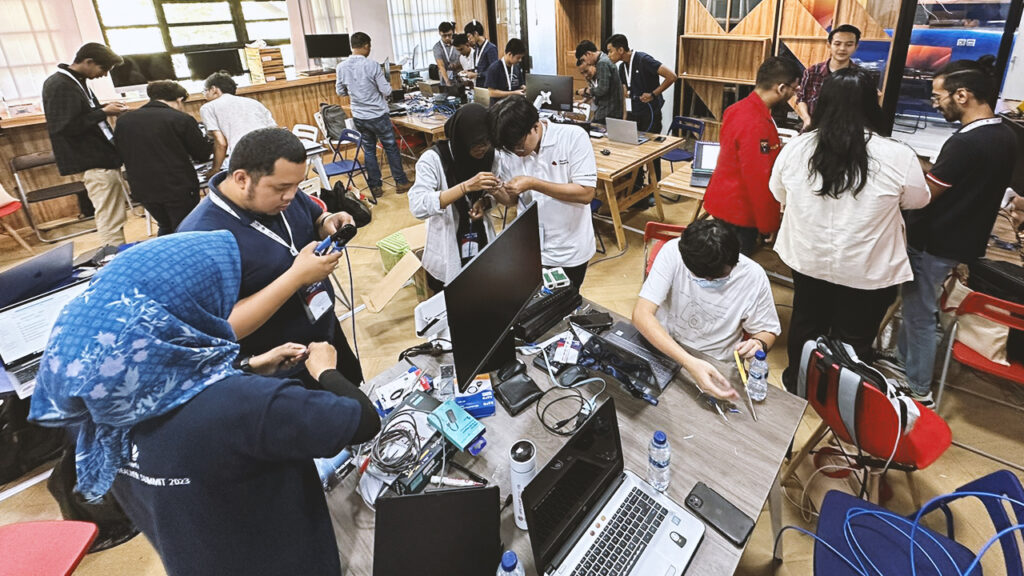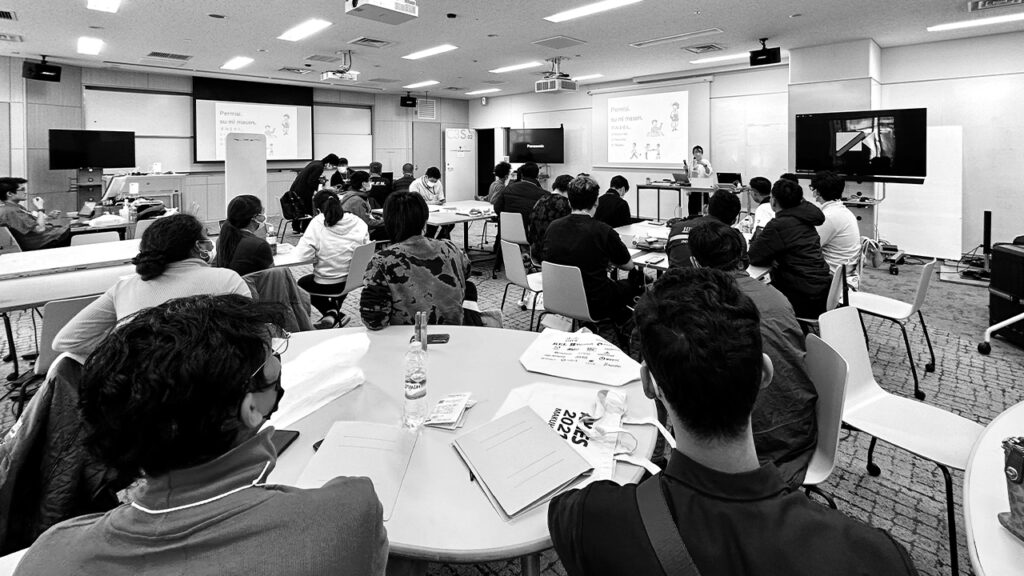
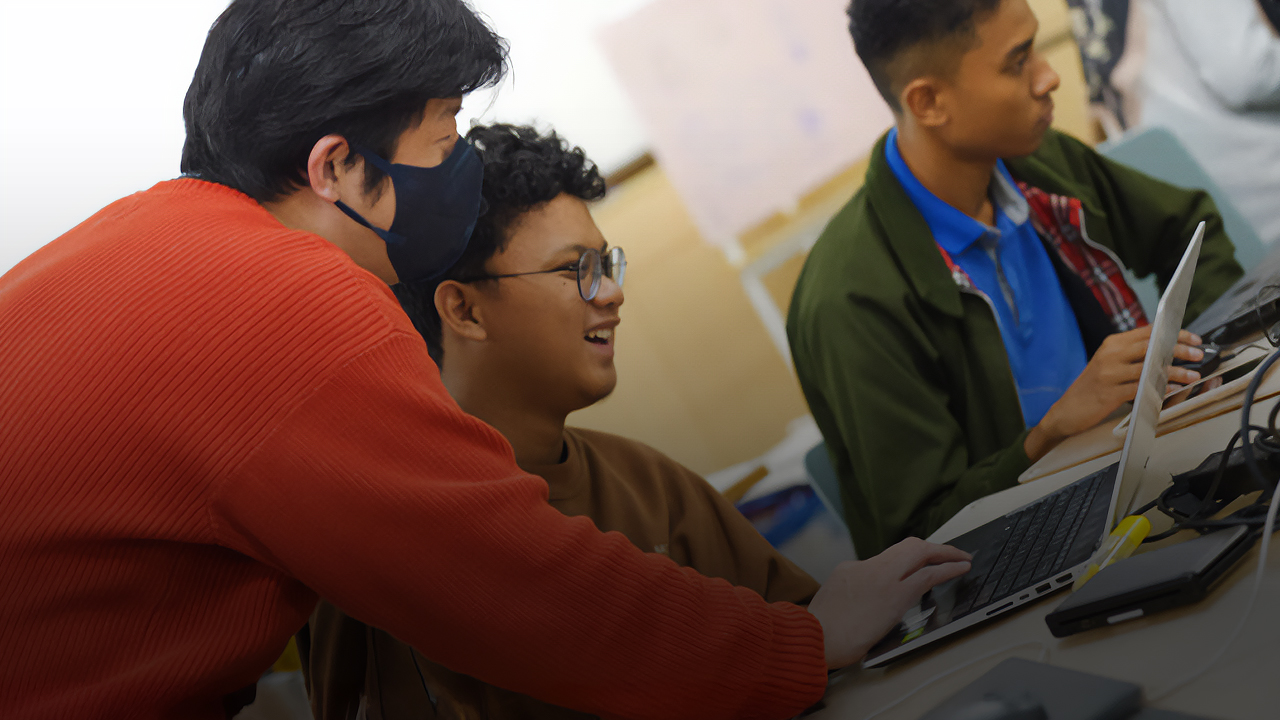
From December 1 to 5, the SOI Asia Haneda Campus at Haneda Innovation City became a laboratory for advanced Internet engineering. Hosted by Keio University and jointly organized with AITAC, APIE Advanced Camp #03 brought together 20 students from six Asian economies (Bangladesh, Indonesia, Malaysia, Myanmar, Nepal, and the Philippines) for five intensive days of hands-on learning, collaboration, and design. The cohort also reflected the program’s commitment to inclusion, with balanced gender participation across the group.
The Advanced Camp is one of the on-site components of the APIE (Asia Pacific Internet Engineering) Program and is designed for students who have already attended and completed the APIE Camp and were nominated by their home universities. The goal is clear: to move beyond theory and experience what it really means to design, deploy, and operate Internet services.
From Architecture to Operations: A Five-Day Engineering Journey
Day 1 – Computer Architect — Play with Docker
APIE lead Dr. Noriatsu Kudo and Prof. Keiko Okawa, director of SOI Asia, opened the camp with remarks and words of encouragement.


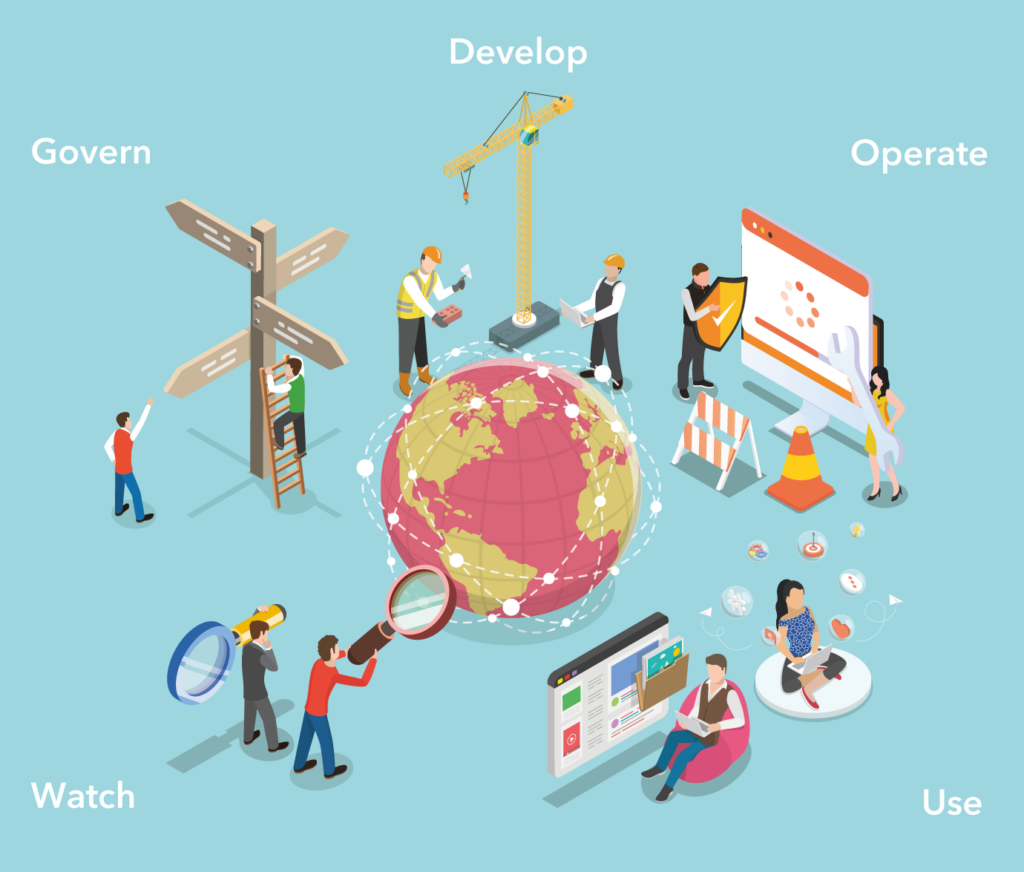
The camp followed a carefully structured curriculum that mirrors the lifecycle of real Internet services — from infrastructure foundations to security and operations.


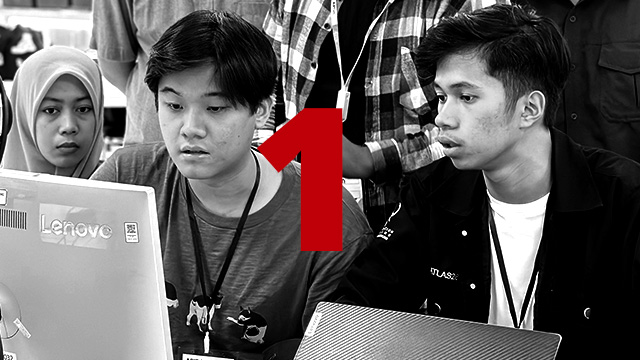
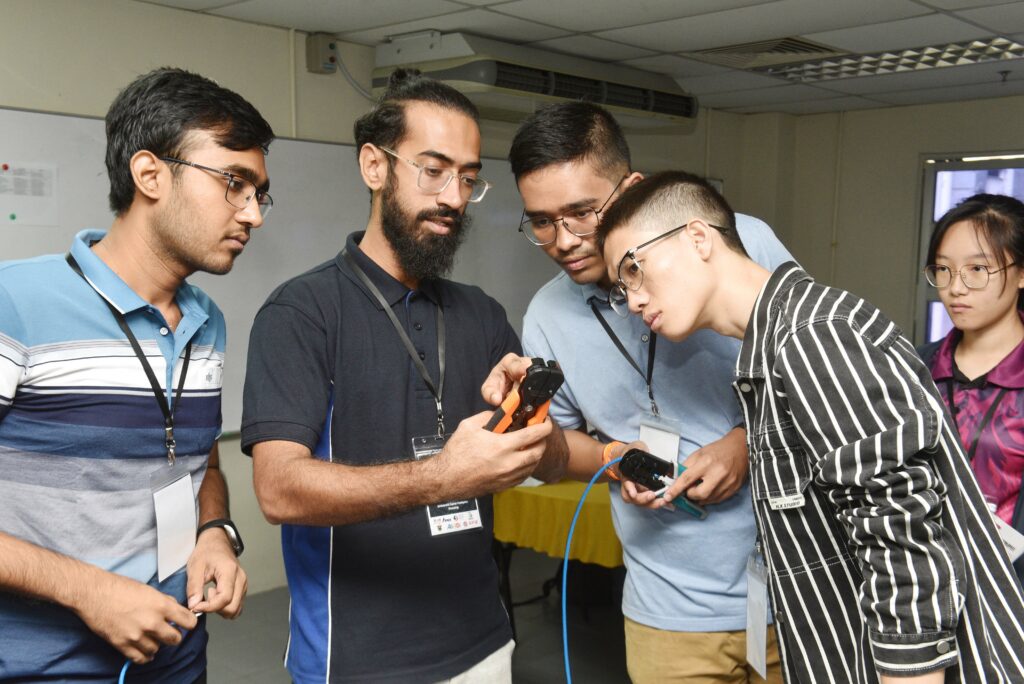
Guided by Prof Yuji Sekiya (Tokyo University/AITAC), students began by working directly with physical servers, installing Proxmox, and building containerized environments using Docker. By comparing containers and virtual machines, participants explored the trade-offs between development and production environments and learned how modern services are structured at scale.
Day 2 – Services Fundamentals — Database


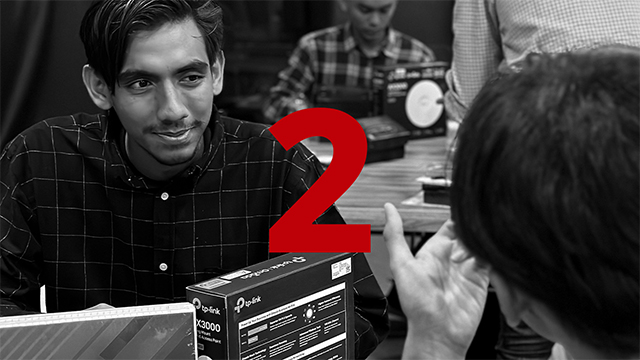
On Day 2, led by Dr. Seiichi Yamamoto (AITAC), the focus shifted to data. Students designed database schemas, deployed MySQL, and connected databases to web applications using Flask, while discussing performance, availability, and security considerations that arise when services grow beyond prototypes.
Day 3 – Monitoring and Visibility


With services running, attention turned to operations. Using tools such as SNMP, Zabbix, and syslog, students learned what to monitor, how to monitor it, and why observability is critical for reliable systems. Visualizing system behavior became a key takeaway. Dr. Shun Arima (Keio University) also shared important advice on service design.
Day 4 – Designing for Resilience and Scale


Through design review sessions and hands-on exercises, participants tackled availability, scalability, and redundancy, identifying and eliminating single points of failure (SPOFs). Hybrid designs combining on-premise servers and cloud resources were explored to reflect real deployment environments.
Day 5 – Industry, Security, and the Real World

On Day 5, the program opened with an industry visit to Sojitz Tech-Innovation’s verification and testing facility in Tokyo’s Toyosu waterfront area. Participants were introduced to the large-scale testing environment, including an overview of the extensive rack-mounted infrastructure, and learned how engineers evaluate system performance before services go live. Through exchanges with professionals, students gained insight into proof-of-concept development, deployment readiness checks, and the types of operational challenges that often emerge after installation in real production settings.


The final learning activity was a security session, covering infrastructure security, vulnerability assessment, and packet analysis — essential knowledge for any publicly accessible service.
Meet the Internet Engineers: Connecting Students and the Community

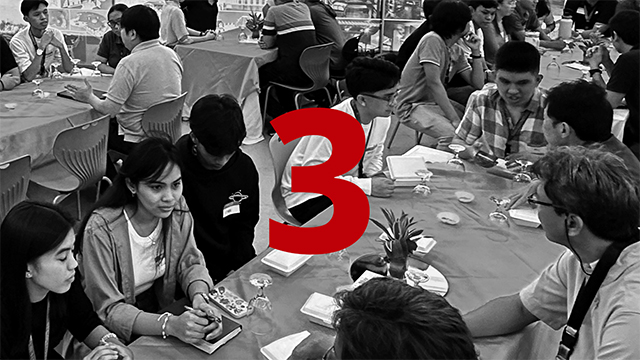
The week concluded with Meet the Internet Engineers, an open networking and reception. Now in its fourth edition, the event is designed as an opportunity for camp participants to meet professionals working across different areas of the Internet ecosystem and to gain insight into the diverse career pathways that network engineers can pursue after graduating from university.


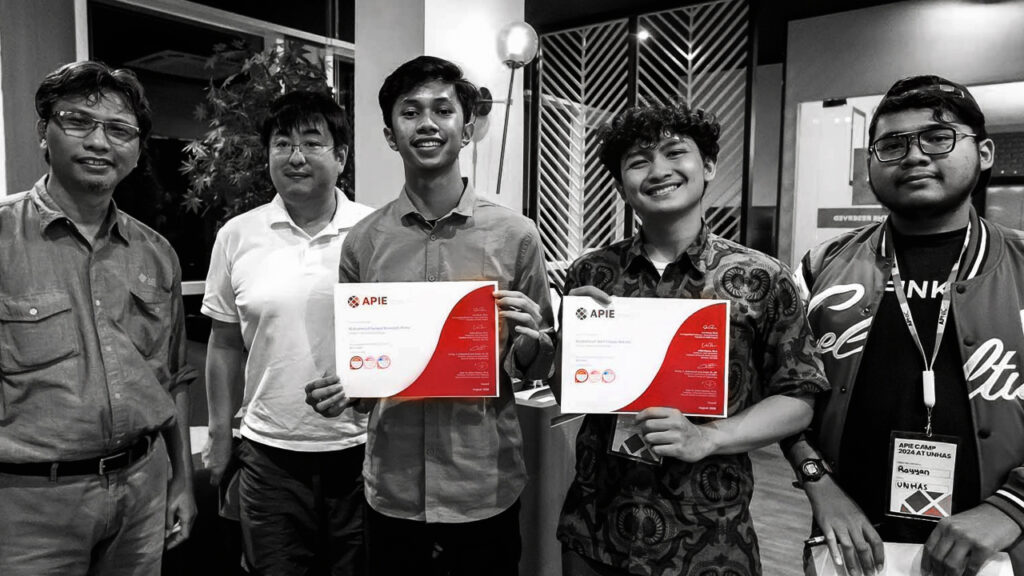
Bringing together industry engineers, researchers, APIE instructors, and community members—including representatives from AITAC partner companies, e-workshop instructors, and Internet exchange and infrastructure organizations—the event offered an informal setting for open conversations and mentorship. During the event, all campers received their certificate of participation.


Through these interactions, students were exposed to real-world perspectives on careers in Internet operations, infrastructure, research, and related fields, reinforcing the idea that technical training can lead to a wide range of professional futures.

Learning by Doing — Together
Throughout the week, students worked in international teams, designing and developing a web-based service addressing real-world issues. Each group had access to physical servers with global IP addresses, DNS infrastructure, and cloud resources, reinforcing the idea that Internet engineering is as much about collaboration and communication as it is about technology.
The Advanced Camp emphasized not only how systems work, but why design decisions matter — from service ecosystems and scalability to operations and security.
Looking Ahead
APIE Advanced Camp #03 reaffirmed the program’s mission: to nurture the next generation of Internet engineers who can design responsibly, operate reliably, and collaborate across borders. After returning to their home institutions, participants will continue working on their projects remotely with their peers. The final presentations are scheduled for late January 2026, and further updates will follow soon.